Book Summary: Days at the Morisaki Bookshop
Introduction
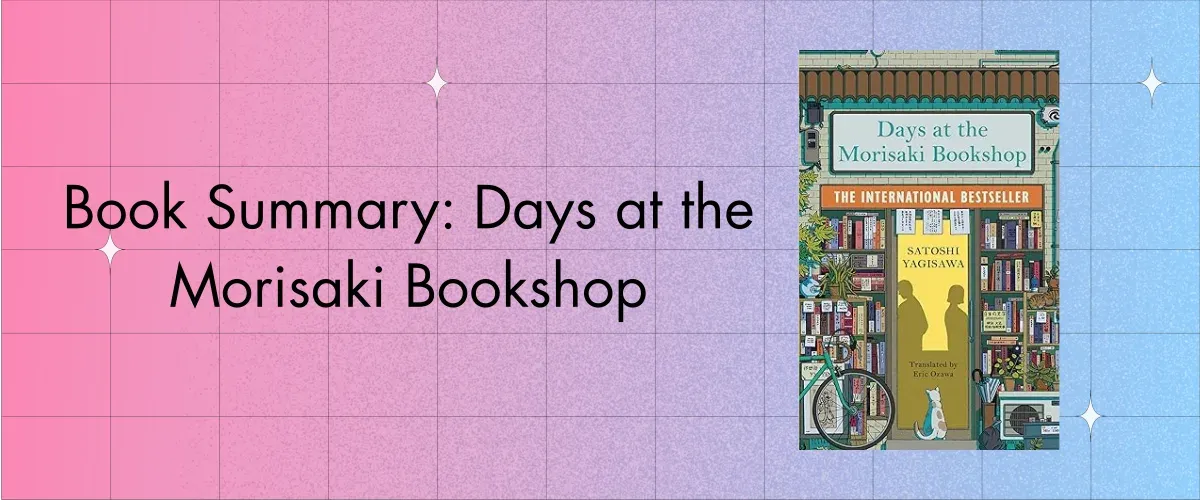
Days at the Morisaki Bookshop is a novel by Satoshi Yagisawa, published in 2010. It was originally published in Japanese and later translated and released in English worldwide by Harper Perennial in 2023.
It is Satoshi’s debut novel and has won the Third Chiyoda Literature Prize, becoming a national bestseller.
Summary of Days at the Morisaki Bookshop
Days at the Morisaki Bookshop is an evocative, deeply touching novel that follows Takako’s emotional journey and ultimate self-discovery. She is a young woman in her twenties.
Takako slips into depression when she finds out that her colleague and love interest, Hideaki, is marrying another woman from the office. And that she’s the second woman in his life.
This revelation felt to her like a bolt of lightning out of the clear blue sky.
What makes matters worse is that all three worked in the same company and often came face to face, making it unbearable for Takako. And soon she hands in her resignation.
The emotional weight of this betrayal isolates her, causing her to withdraw from her daily life and seek refuge in the darkness of her room, where she spends days in solitude, grappling with her heartbreak.
Just as Takako’s life seems to be spiralling into an abyss, she receives an unexpected call from her uncle Satoru, whom she hasn’t seen in over a decade. Satoru extends an offer for her to stay at his second-hand bookstore, the Morisaki Bookshop, located in the literary heart of Tokyo—Jimbocho.
This district is renowned for its rich collection of second-hand bookstores and literary culture, making it an ideal setting for Takako’s journey.
Despite her initial reluctance, Takako accepts her uncle’s offer, seeing it as a necessary escape from her current plight.
As Takako struggles with heartbreak, she gradually finds comfort and a renewed sense of self while spending time in her uncle’s second-hand bookstore, surrounded by the faintly damp smell of ageing books and meeting the shop’s eccentric customers.
The Morisaki Bookshop, with its quaint, nostalgic charm, becomes more than just a place for Takako to live; it becomes a sanctuary where she begins her journey of healing.
Takako’s daily life at the bookshop involves interacting with the eclectic mix of customers who frequent the store, each bringing their own stories and perspectives.
These interactions, coupled with the immersive experience of being surrounded by books, play a pivotal role in her recovery.
As she delves into various literary works, Takako finds parallels between the characters in the books and her own life, drawing strength and inspiration from their stories.
| 💭 Haven’t we all found pieces of ourselves in the pages of a beloved book? |
|---|
Over time, Takako takes on more responsibilities at the bookshop, helping her uncle with daily chores and even beginning to enjoy recommending books to customers.
This sense of purpose and the routine of working at the bookshop provide her with the stability she desperately needs. The once-overwhelming pain of heartbreak begins to fade, replaced by a newfound appreciation for the simple joys of life.
The narrative takes a significant turn with the return of Momoko, Satoru’s estranged wife, who had left five years earlier with a cryptic note stating, “I’m fine. Please don’t look for me.”
Momoko’s reappearance brings with it a wave of unresolved emotions and questions. Her return forces Takako to confront not only her own feelings but also the complexities of family dynamics and forgiveness.
As Takako navigates her evolving relationship with her uncle and Aunt Momoko, she uncovers layers of family history and secrets that had remained hidden. These revelations deepen her understanding of herself and her family, highlighting themes of reconciliation and endurance in family bonds.
The novel delicately explores the relationships between Takako, Satoru, and Momoko, revealing the intricacies of love, loss, and redemption.
Throughout the novel, Takako’s character undergoes significant development. She evolves from a heartbroken and despondent young woman into someone who finds strength and resilience through her experiences at the Morisaki Bookshop.
The process of healing is not linear, and Takako’s journey is marked by moments of introspection, self-doubt, and gradual acceptance.
One of the central themes of the novel is the transformative and healing power of books. The Morisaki Bookshop serves as a metaphorical refuge, showing how books can offer comfort, insight, and a sense of connection during challenging times.
What begins as a retreat from heartbreak gradually becomes a journey of healing and self-discovery, as Takako learns to find solace in books, connection in people, and a new sense of herself.
Conclusion
Days at the Morisaki Bookshop is a beautifully crafted story that resonates with readers on multiple levels.
It is a story of heartbreak and recovery, of finding one’s place in the world, and of the healing power of books and human connection.
Satoshi Yagisawa’s poignant narrative and introspective style capture the emotional depth of Takako’s journey, making it a compelling read for anyone who believes in the magic of literature and the resilience of the human spirit.
In conclusion, Days at the Morisaki Bookshop is a testament to the quiet miracles of healing and self-discovery that await us within the pages of a good book.
I highly recommend this book to anyone who enjoys cosies, stories of personal transformation and believes in the timeless magic of books.